









StoneShot Learning > Integrations > StoneShot for Sales – Overview
StoneShot for Sales – Overview
Collaboration between marketing and sales teams has never been easier thanks to StoneShot for Sales (SSFS).
Available within both the Salesforce and Microsoft Dynamics integrations, StoneShot for Sales gives sales users access to the full range of StoneShot functionality, so they can create, send, and report on email campaigns without leaving their CRM.

Your Dashboard
The first thing you’ll see when you log into StoneShot for Sales is your dashboard, the central hub bringing together your engagement metrics, contact activity, emails, lists, and contacts in a single view. From here, you can monitor engagement, spot opportunities for follow-up, and access the tools you use most.
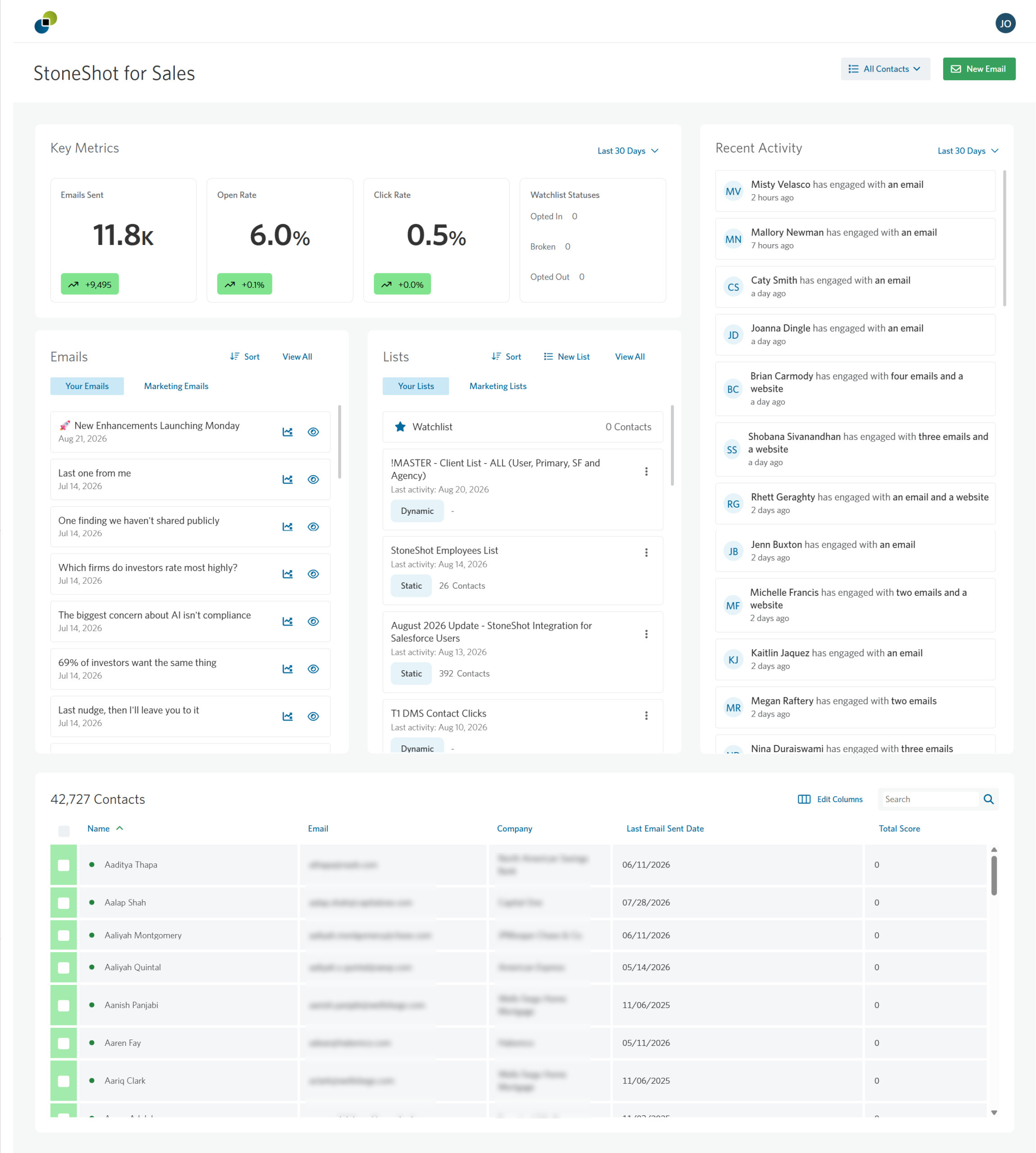
At the top of the dashboard, you can select a contact list to focus your view on a specific audience. By default, the dashboard displays data for all contacts you have access to. When you select a list, the dashboard automatically updates, showing relevant metrics, activity, and contacts for that group.
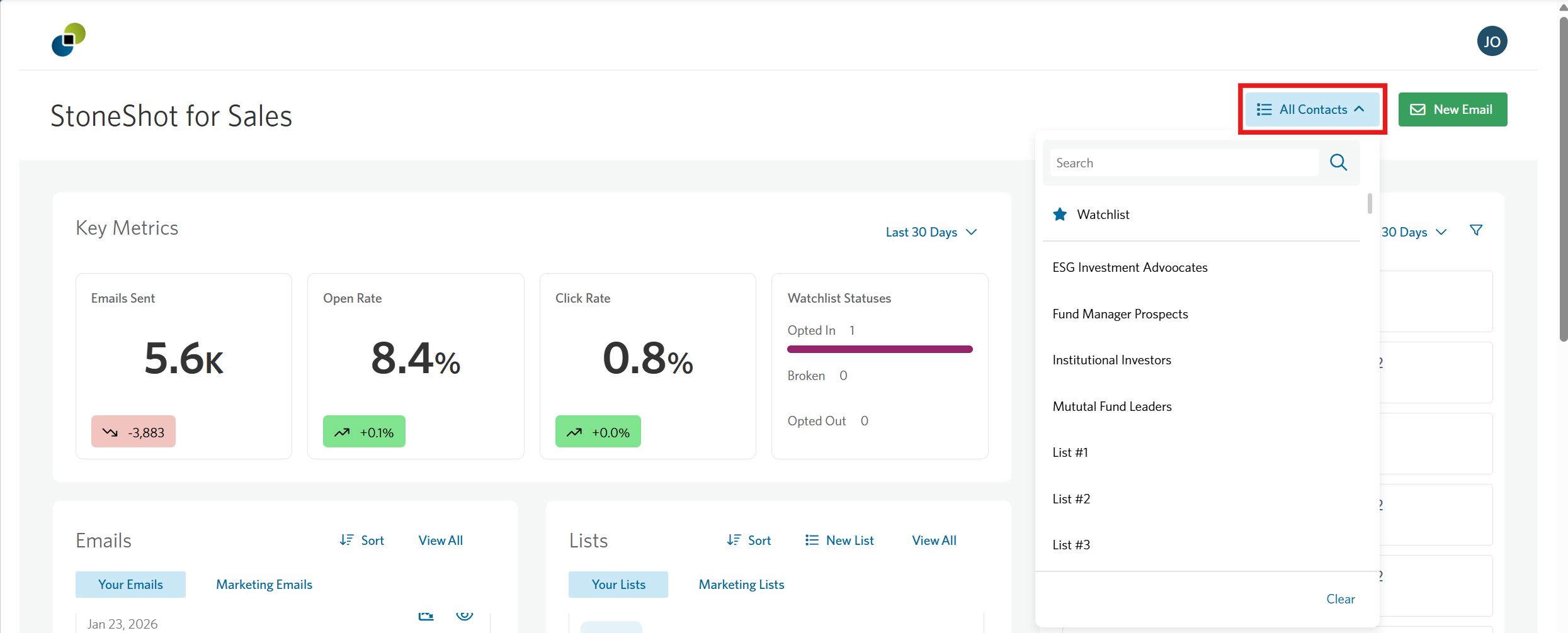
One list you can select is your Watchlist. Watchlists help you keep track of key relationships. Add contacts to your personal Watchlist to monitor engagement from prospects, clients, or other important accounts.
Key Metrics
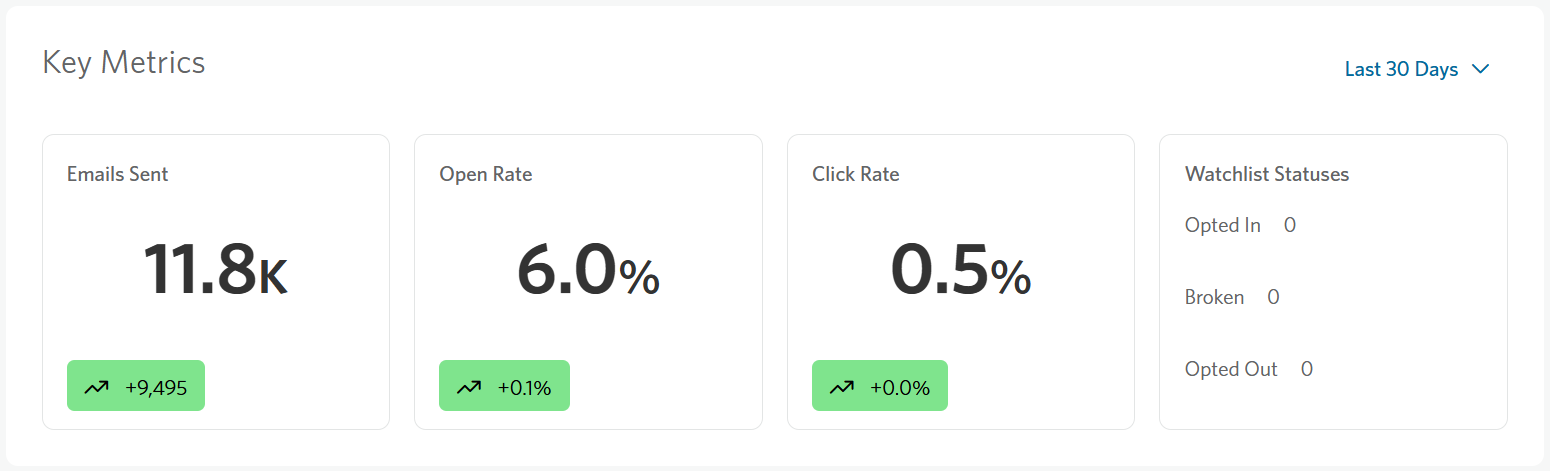
The Key Metrics panel provides a snapshot of email engagement and activity over time, with a trend indicator showing whether each metric is up or down compared to the previous period. Alongside it, the Watchlist Statuses panel shows a breakdown of Opted-In, Opted-Out, and Bounced contacts on your Watchlist.
Recent Activity
The Recent Activity panel provides a real-time view of how contacts are engaging with your communications. Activity is grouped by contact, making it easy to see who has opened, clicked, or interacted with your emails.
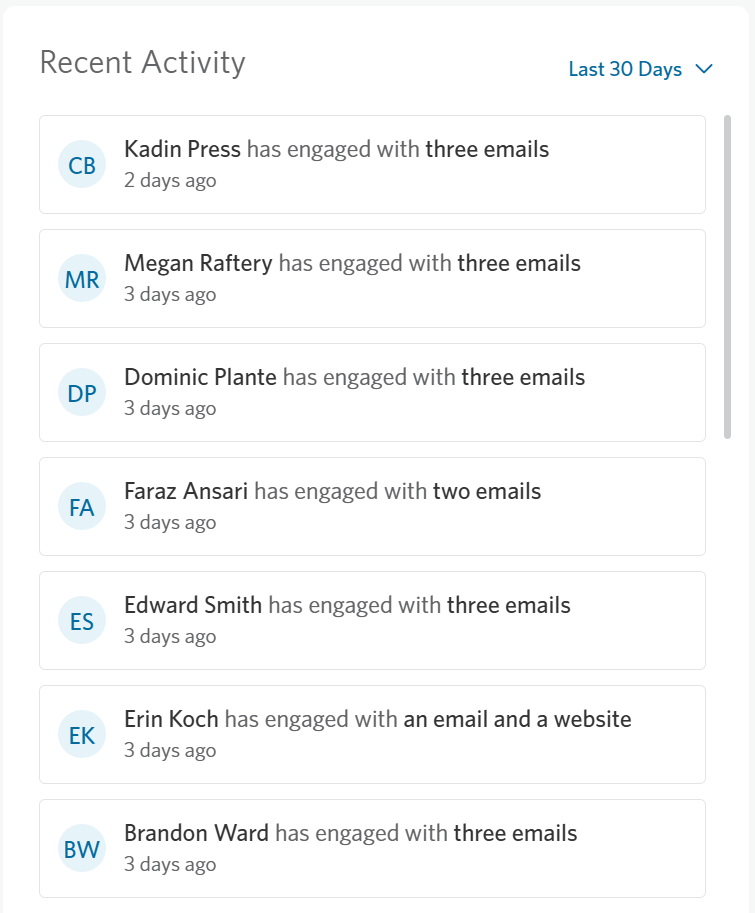
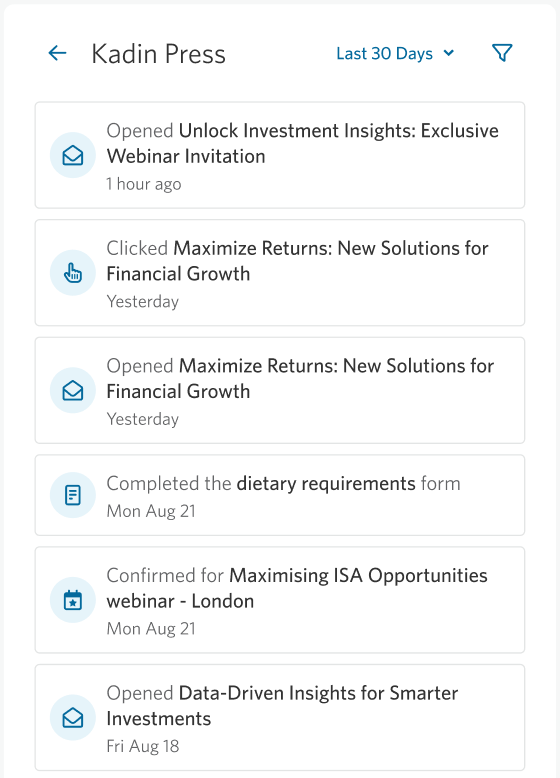
Select a contact to view their detailed activity history, which you can filter by time range or engagement type.
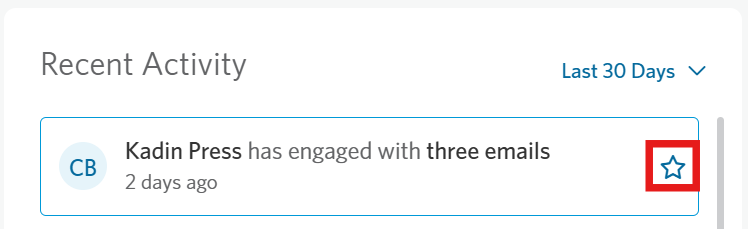
To add a contact to your Watchlist, select the star next to their name. Toggle the star off to remove them.
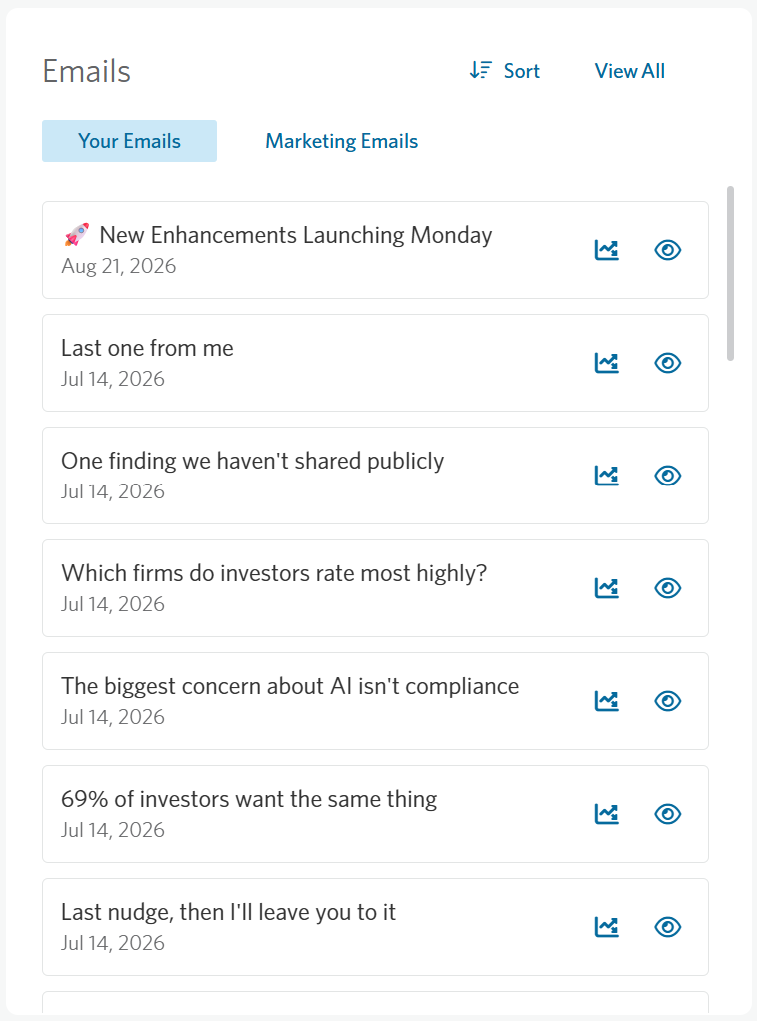
Emails
The Emails panel gives you visibility into both emails you’ve sent directly and communications delivered through StoneShot marketing campaigns. Select an email to review its content or view its campaign report.
Lists
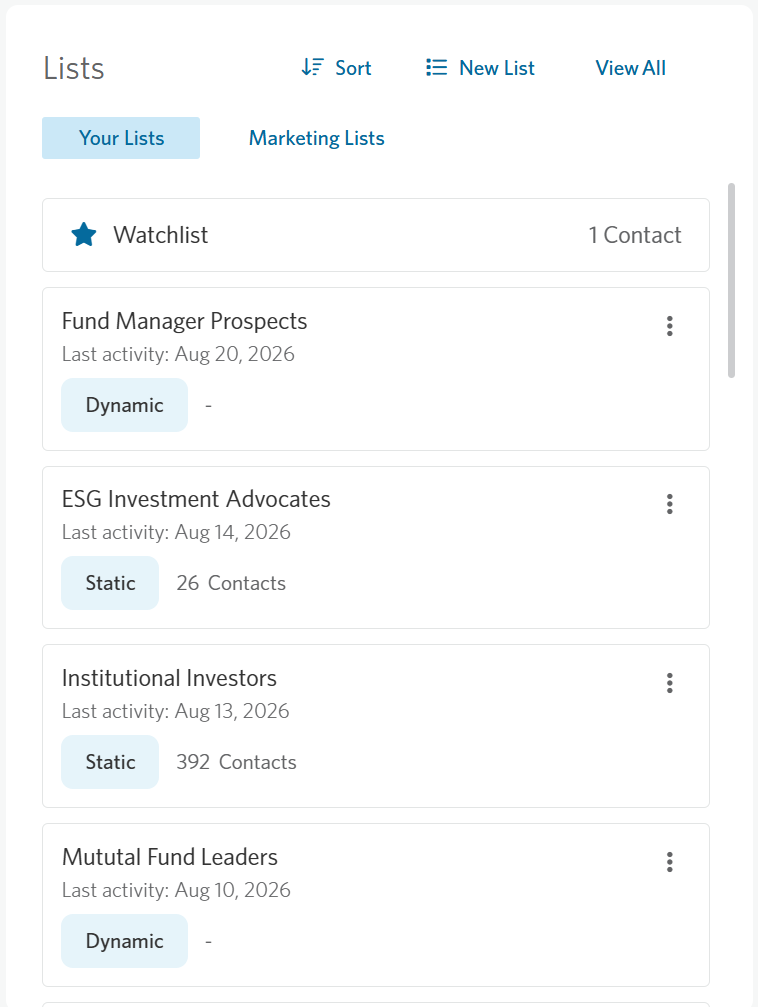
The Lists panel gives you quick access to your own lists and marketing lists shared with your team. For the full list management experience, including creating and editing lists, see Managing Your Lists.
Contacts
By default, the Contacts grid shows all contacts you have access to. If you’ve filtered your dashboard by a list, only the contacts on that list who are assigned to you will appear.
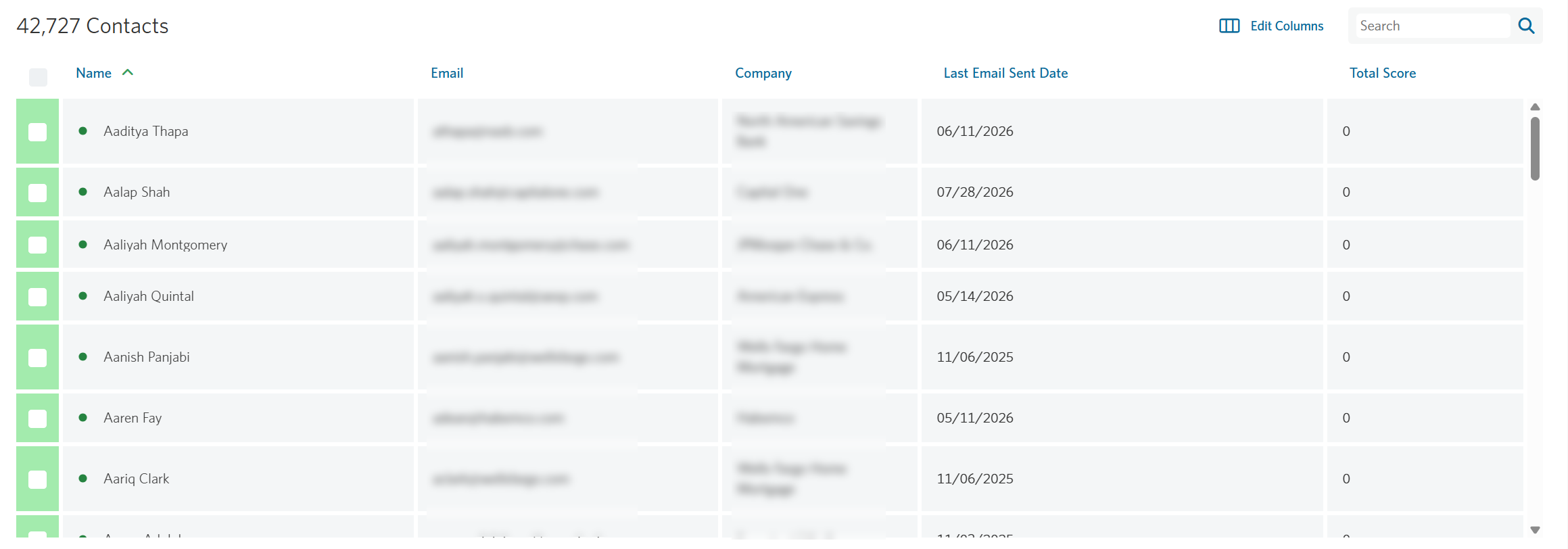
Customize which columns are shown, select contacts to add them to your Watchlist or remove them from a list, or click through to view their CRM record.

FAQ
How can a sales user be created if they don’t have access to the StoneShot platform to create their password?
Sales users don’t require access to the StoneShot platform. Existing users with admin roles can create their accounts for them to use StoneShot for Sales. When setting up the sales accounts, the following needs to be set:
- The user type set to: Sales
- The Sales Manager set to the user’s name
- The Salesforce User set to the user’s name
- Auto-create user enabled

Why can't a sales manager see their contacts in StoneShot for Sales?
The user needs to have their Sales Manager assigned in their StoneShot account settings, in the Options > Users area.

How long does it take for a sent campaign to show up in SSFS reports?
It shouldn’t take longer than 5 mins. If it takes any longer, then please email support@stoneshot.com.
How do I create an email template for StoneShot for Sales users to send out?
To create an email template for use in StoneShot for Sales, simply follow the standard process for creating an email in the StoneShot platform. Once the email is created, it will automatically be accessible to the Sales team through the StoneShot for Sales interface.
When creating a new email, you can choose from various formats such as event invitations, newsletters, or Outlook-style emails. After selecting the format, you can populate the main content and include a dynamic or static sign-off.