










StoneShot Learning > Event Marketing > Creating a Registration Form
Creating a Registration Form
The Event Builder comes with its own Form Builder (yup, that is a lot of builders, we’ve had a word with our branding team).
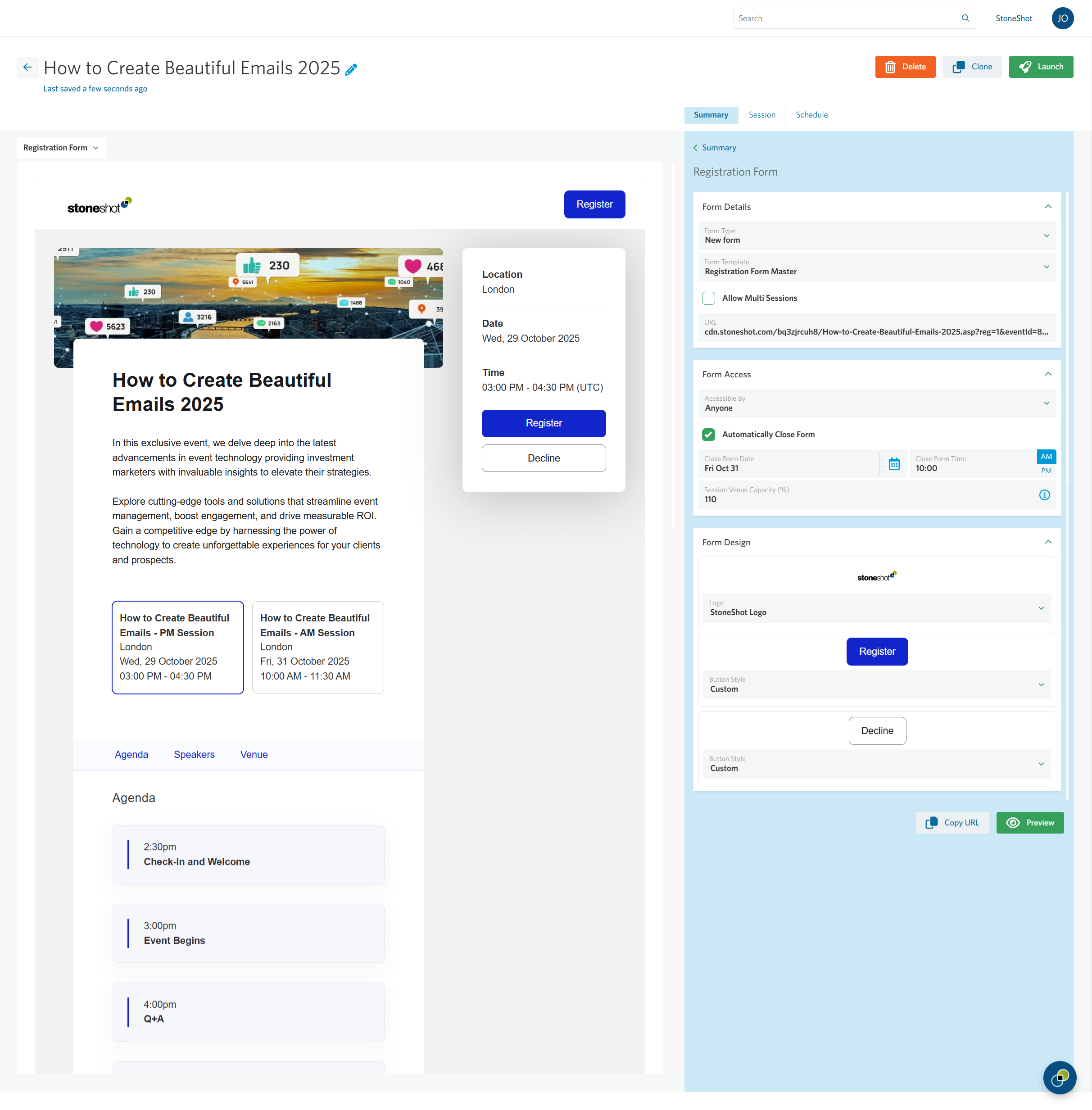
The Form Builder has been designed to speedily create on-brand registration forms based on pre-defined templates. You can pick from a library of form templates or have us make a custom template for you. You can also use an existing StoneShot form or even create your own externally.
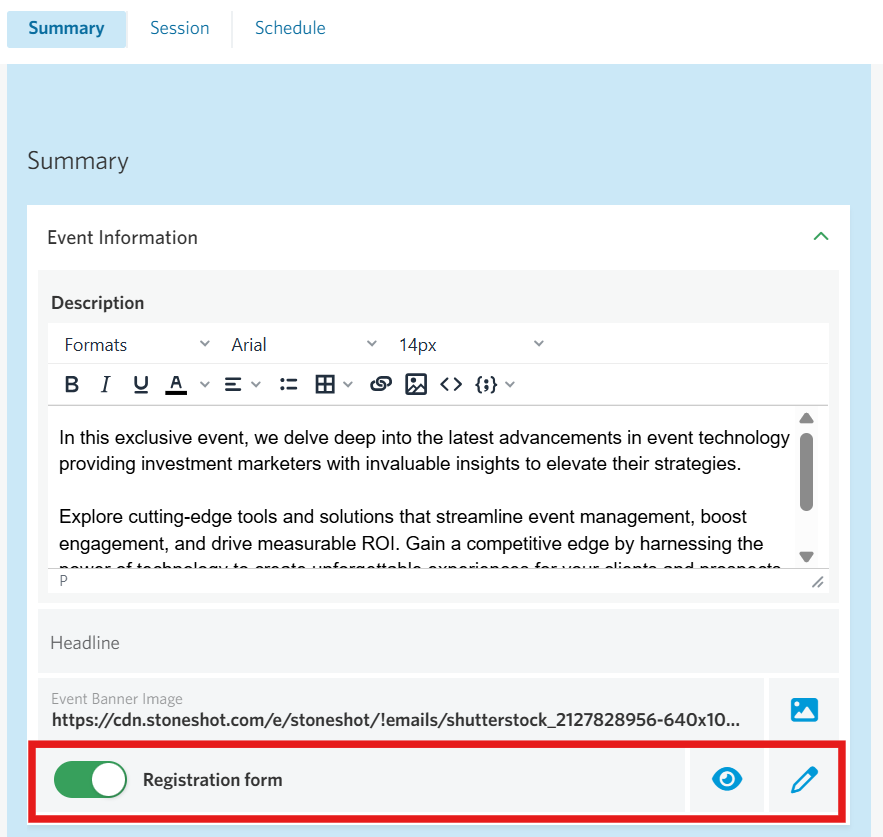
Let’s assume you’re using one from our library. Access the Form Builder via the blue edit pencil in the Registration form field within the Summary tab.
Form Details
You’ll see our default form which you can change by picking another on the Form Template dropdown. The default form shows all sessions in the event, allowing your client to choose a single session. If they can attend multiple sessions – for example a single-venue event with breakout sessions – check “Allow Multi Sessions” on the right.
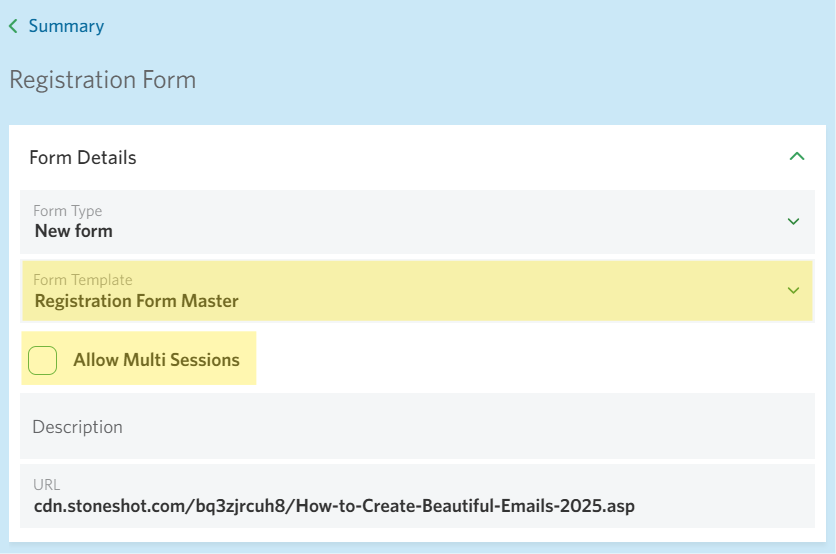
Below this, you can enter a custom description for the form, though we usually use the event description (see Creating Events). There’s a URL too for the form, though the invitation emails in our library have the form link in them already.
Form Access
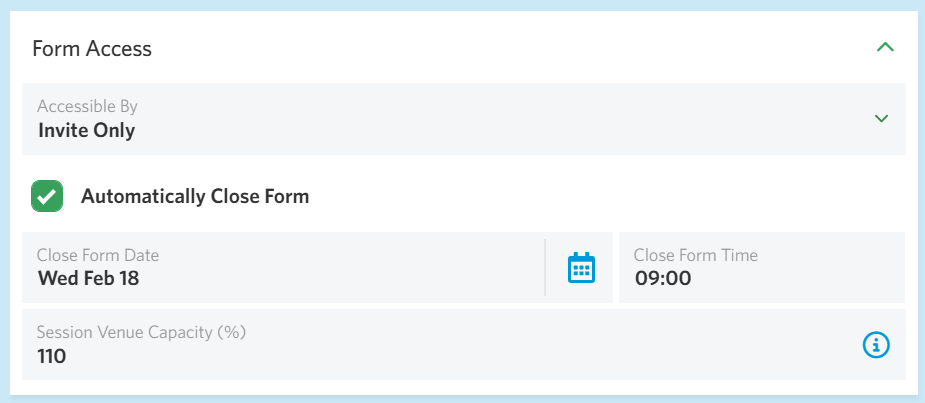
You can also restrict who can access a form. By default it’s open to anyone but you can change this to Invite Only. That means the form can only be submitted by contacts you’ve invited to the event, and it also hides sessions they’ve not been invited to.
You can automatically close the form too on a specific date or venue capacity. By default we close the form on the start time/date of the last session in the event. We also recommend a Session Venue Capacity of 110% to allow a 10% overrun for no-shows.
Form Design
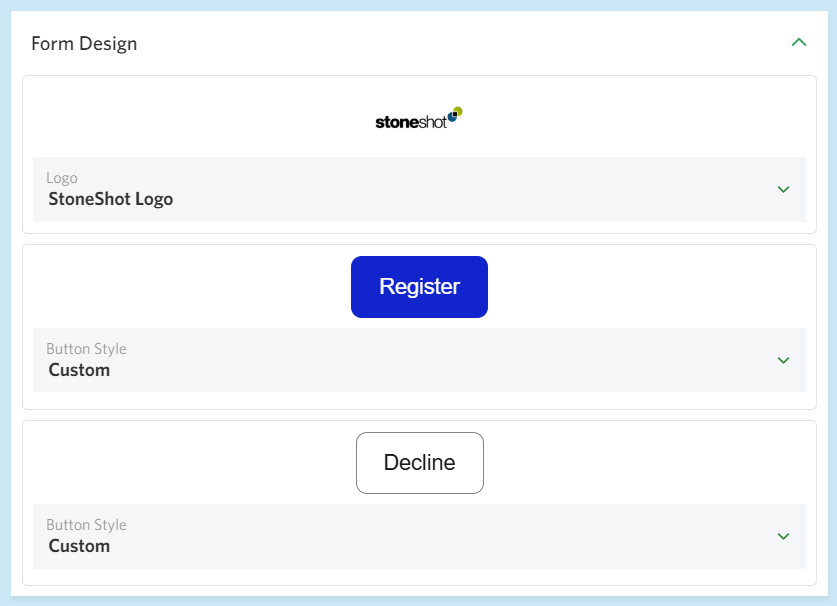
The Form Design section lets you customize your form’s visual elements, such as the logo and Register/Decline button styling. It’s fully synced with your Brand Manager, allowing you to choose from the logos and button styles already set up there. Any updates you make will instantly appear in the preview on the left.
Form Elements
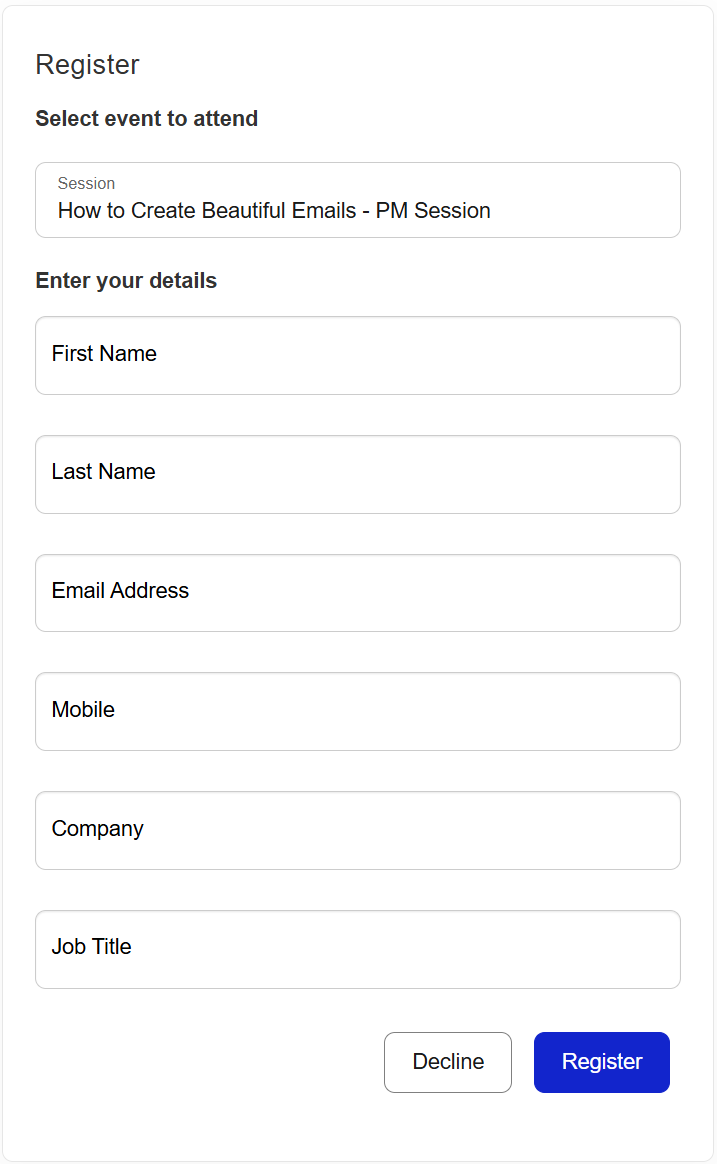
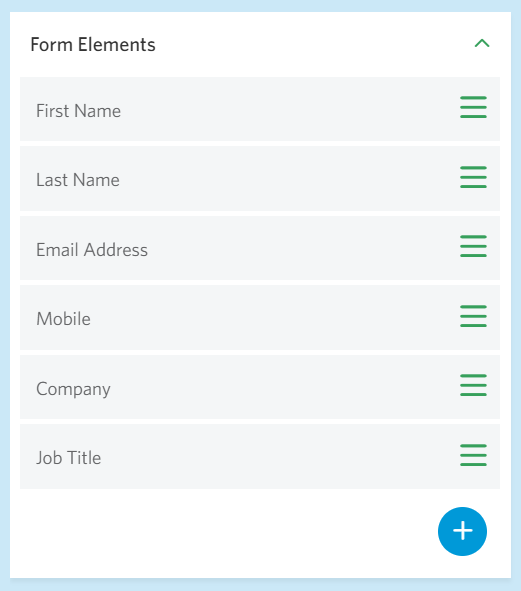
Right, so let’s make this form your own! You can choose the standard fields you’d like to show on the form and make custom fields too.
 |  |
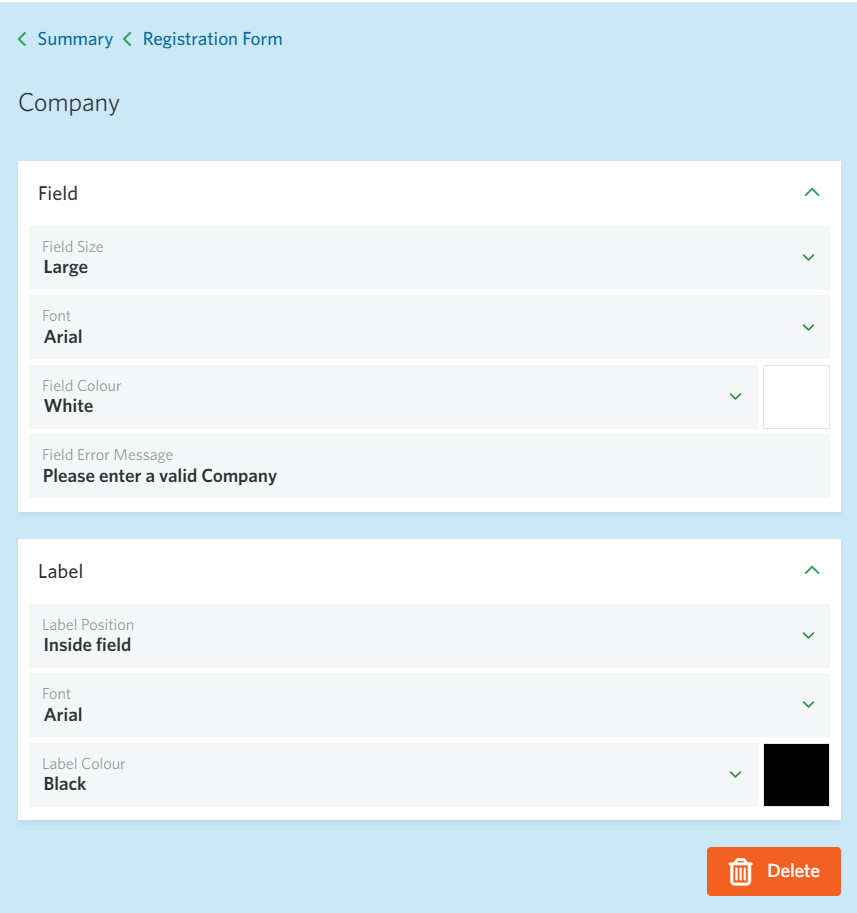
Each field has properties. Just click on the field and you’ll see you can change the field size, font colors, error message and label position. To remove a field, just hit Delete at the bottom (don’t worry, you can add it again later).
You can navigate back to the form by clicking Registration Form at the top of the panel.
Adding Form Fields
To add a field, hit the plus icon and give the field a name. The Form Builder will look for existing fields and segments first, so if you type “diet” you’ll see Dietary Requirements appear. You can simply click on Dietary Requirements and hit Save to add it to the form. You can add any contact fields and segments in the same way.
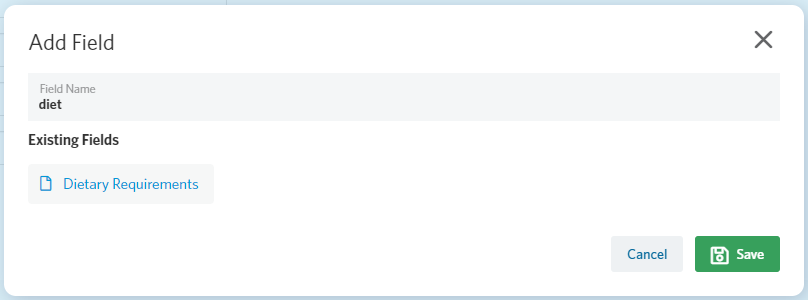
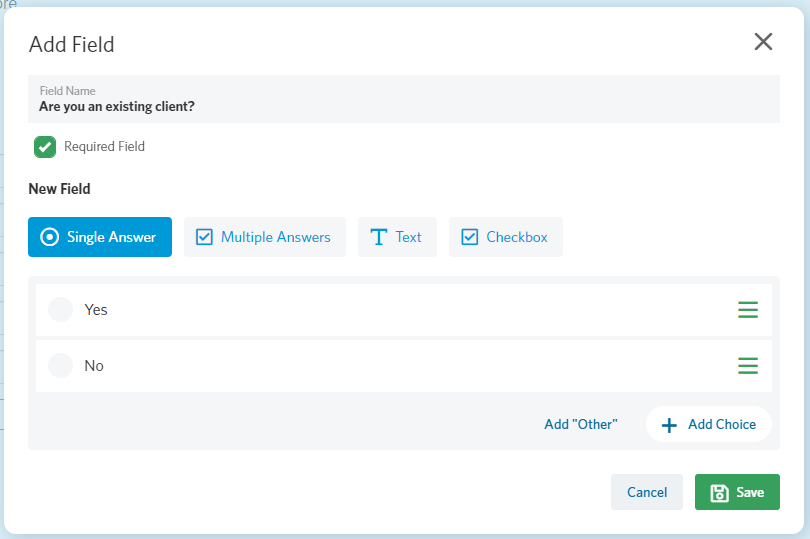
To add a new field, simply type the full field name and pick a field type from the ones listed below.
- Single Answer – two or more options are given, only one can be selected
- Multiple Answers – two or more options are given, many can be selected
- Text – single or multiple line text box
- Checkbox – single check question
Let’s go with Single Answer. You can add more choices of course.
Form Messaging
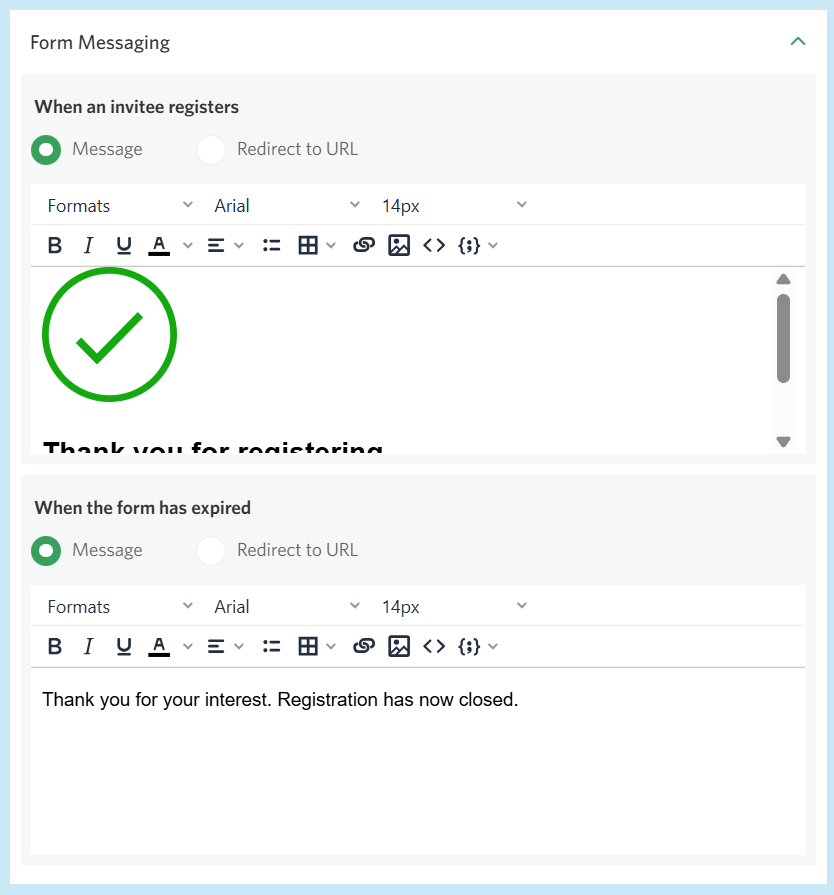
We’re nearly there! The last touches are the messaging around the When an invitee registers and When the form has expired. Alternatively, you can redirect to other pages by entering a URL.
Preview Form
You can preview your form and additional “Success”, “Decline”, “Expiry” and “Not Open” pages via the dropdown on the left.
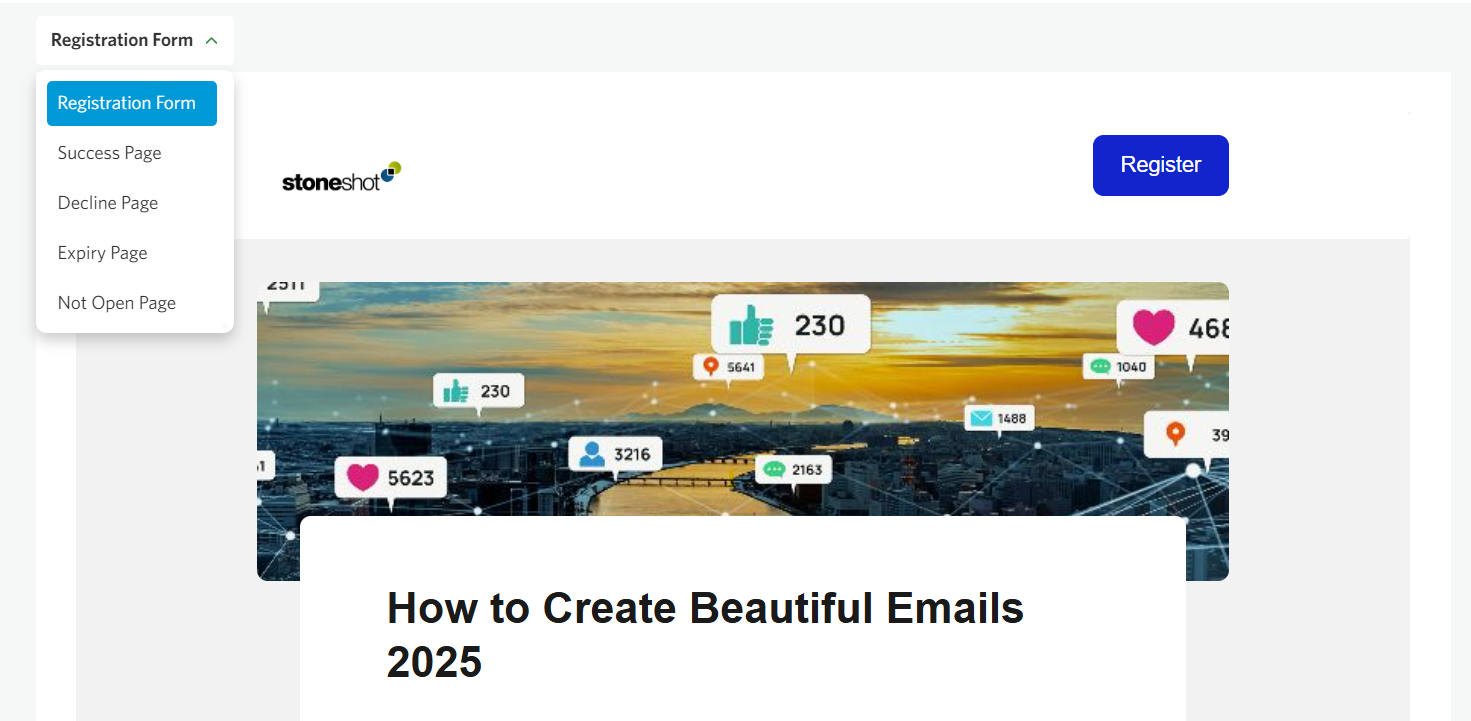
The preview panel will automatically update as you make any edits to the form elements and messaging.
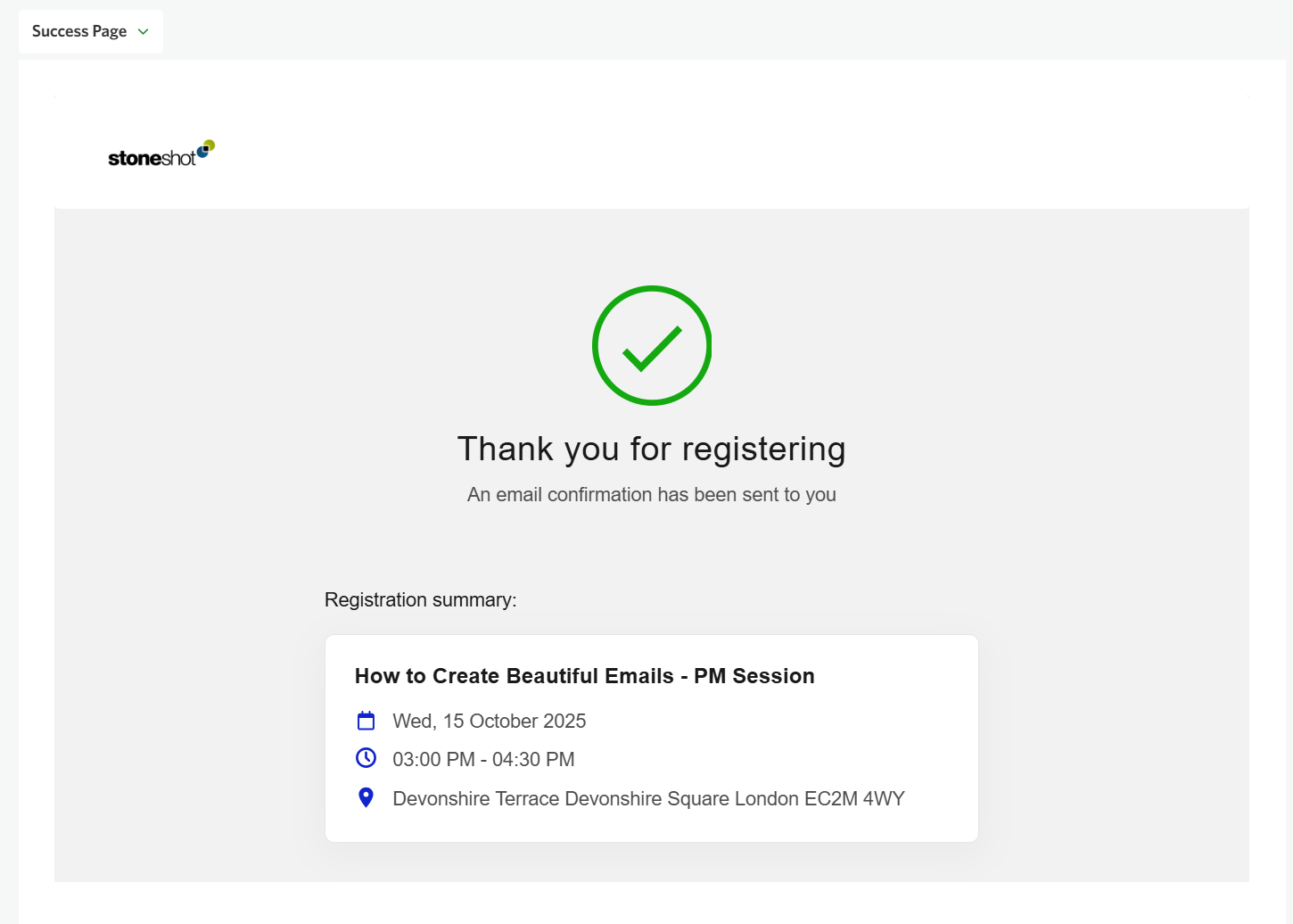
So that’s the form complete. If you’ve not done it already, let’s setup the Sessions or Schedule.
FAQ
Can I embed event forms into my website?
Yes. Event forms can be embedded directly into your website using an iframe.
Typically, you would create a version of the form without the header and footer sections and set it to display at full width. You can then embed the form on your website using the iframe code below:
<iframe src=”https://cdn.stoneshot.com/cgifupw8b3/my_form_name.asp“></iframe>
Your web team can adjust the iframe settings, such as the width and height, to ensure the form displays correctly within your website.
Can I customise the sections or fields that appear on an event form?
The sections included in the default event form are fixed and cannot be removed. However, individual contact fields can be removed by clicking on the field and selecting Delete.
If you require a more customised registration form, please get in touch with the Support Team and we’ll be happy to help explore the available options.
Why is the registration form showing someone else's details?
Each registration link is personalised to the original recipient of the email. If the invitation is forwarded to someone else, the registration form will display the original recipient’s details.
This also applies to internal test emails that are forwarded to colleagues or clients.
If another person needs to register, they should use their own personalised invitation link. Alternatively, you can remove id={MEMBERURLID} from the end of the URL to allow them to register using a blank form.
How can I see a preview of my registration form?
To preview your Registration form, go to the Summary tab and click the eye icon next to Registration form.
How can we prevent fake submissions on our event registration form?
We can add Google reCAPTCHA to your registration form to help prevent automated (bot) submissions.
Please get in touch with the Support Team and we’ll be happy to add this to your form(s).
Do I need to link a dynamic registration form to my event?
While it’s not required for your event to function, we recommend linking a dynamic registration form where possible. This allows you to report on the registration fields in your event registration reports.
If you already have a dynamic registration form, enable the Registration toggle, click the Edit icon, set the Form Type to Existing Form, and select the appropriate form.
Why can't I see my registration form fields in the event registration report?
If you can’t see your registration form fields in the event registration report, check the Summary tab to ensure a registration form has been linked to the event.
Click the pencil icon next to Registration form, select the appropriate Form Type and choose the relevant registration form. Once linked, the form fields will be available to include in your event registration report.
How can I close the registration form for a cancelled event?
If you’re using the Event Builder Registration form, go to Summary and locate the Close Form section. Enter today’s date in Close Form Date to immediately close the registration form and prevent any further registrations.
If you’re using a custom dynamic registration form, please contact the Support Team for guidance, as the process may vary depending on your setup.
Can we add a waitlist option for our event?
Yes. You can configure a waitlist-style process by setting an Overbook limit for your venue. This allows the registration form to continue accepting registrations after the venue capacity has been reached, while placing these contacts into a separate Event Status (for example, Interested but unable to attend).
You can then create a schedule to send an automated email to these contacts, letting them know they have been added to the waitlist.
If you’d like help setting this up for your event, please contact the Support Team and we’ll be happy to assist.
Why does the form submission report not show the same contacts as the event registration report?
The two reports capture different information. The Form Submission Report only includes contacts who registered by submitting the event registration form. The Event Registration Report shows the full list of registered contacts, including anyone who may have been registered manually through the StoneShot platform. For this reason, the Event Registration Report provides the most accurate view of total event registrations.
How can I make my dynamic registration form register contacts for my event?
Replace the values in the URL parameters below with the IDs for your event and session:
?event=[EVENTID]&session=[SESSIONID]
Once updated, registrations submitted through the form will be associated with the specified event and session.
Why has my registration form closed even though the venue capacity hasn't been reached?
The capacity set at the Venue level is only used as a placeholder when creating new Sessions and does not control registration limits for existing events.
The registration form will close once the capacity configured for the individual Session within the Event has been reached. This limit is independent of the capacity shown in the Venue section.
To allow additional registrations, update the capacity in the relevant Session settings. Changes made to the venue capacity will not automatically apply to existing sessions.
How can I get my registration form to pre-populate with the recipients' details?
Add the following parameter to the end of the form URL: &id={MEMBERURLID}
This passes the contact’s unique tracking ID to the form, allowing StoneShot to identify the recipient and automatically populate any available contact information.
For example: https://yourformurl.com?event=[EVENTID]&session=[SESSIONID]&id={MEMBERURLID}
How can we use different disclaimers across our events?
If you are not using the Event Description field for any other purpose, we can configure it to populate the disclaimer section on the dynamic registration form. This allows you to set a different disclaimer for each event.
Where can I find the Event and Session IDs?
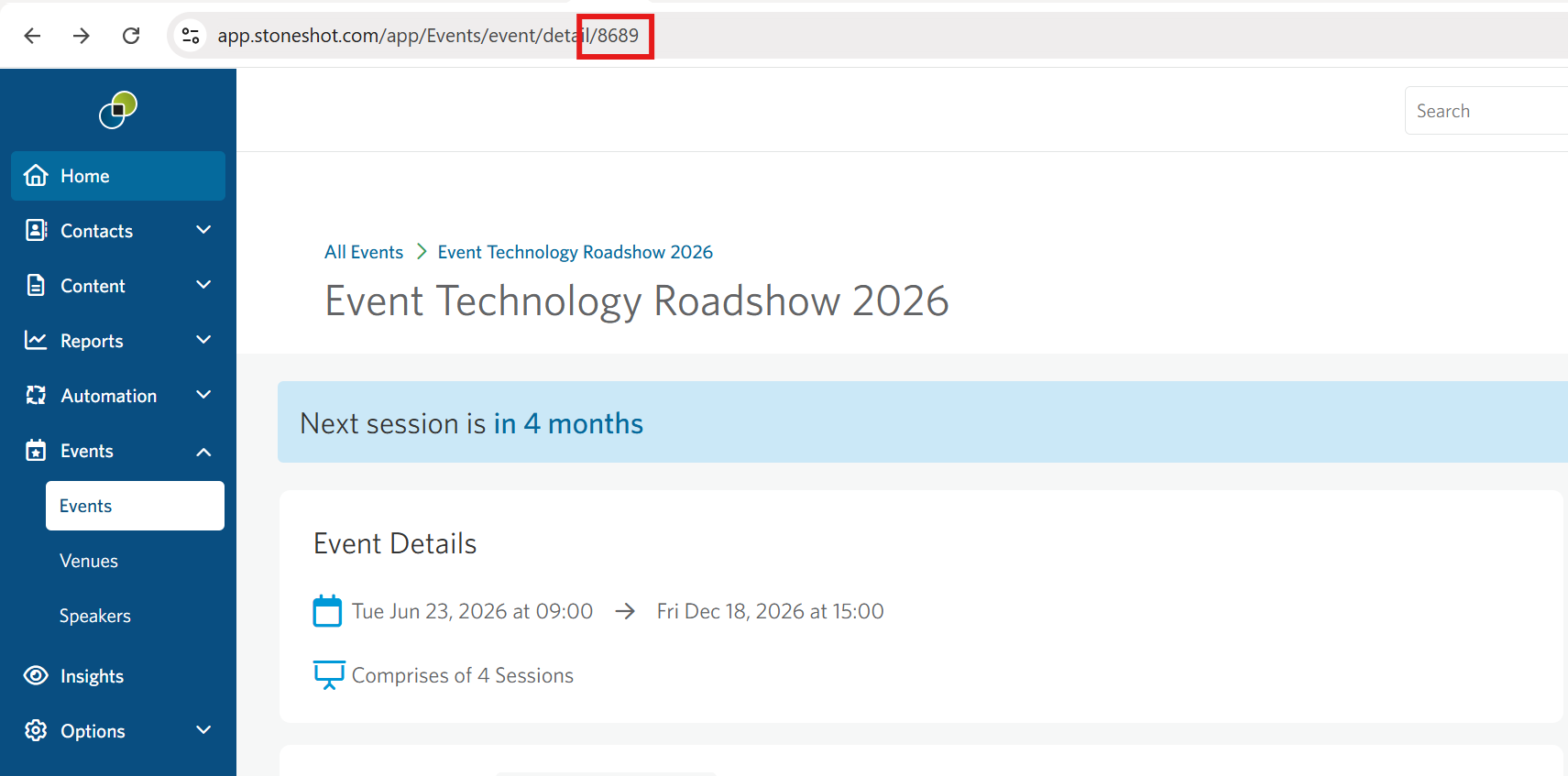
To find the Event ID, open the relevant event and look at the URL in your browser’s address bar. The digits at the end of the URL are the Event ID.
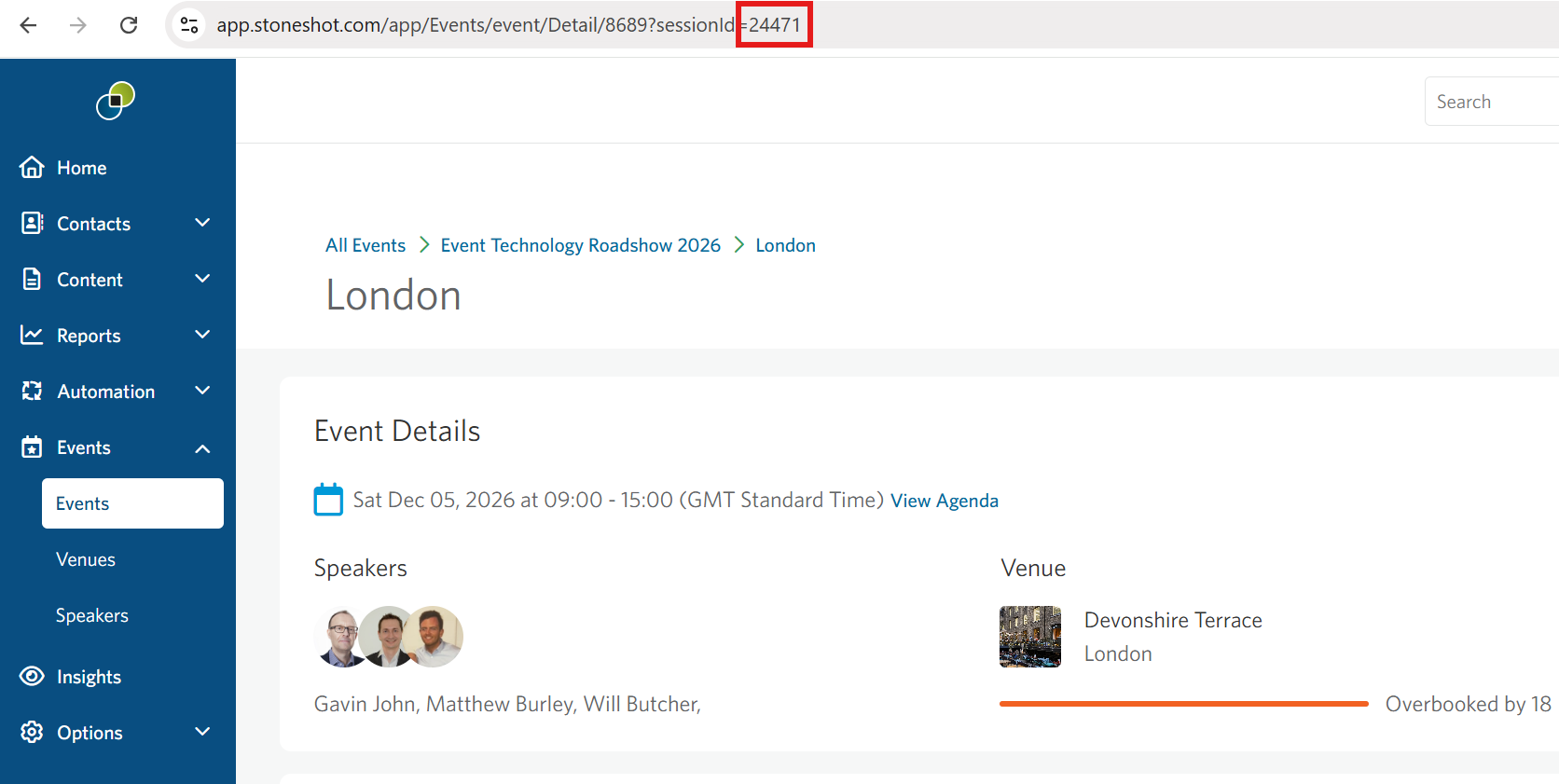
To find the Session ID, open the relevant session within the event. The digits at the end of the URL will show the Session ID.
What is the difference between “Registered” and “Confirmed”?
Registered contacts are those who have completed and submitted the event registration form.
Confirmed can be used as an additional approval step if you need to review or vet registrations before accepting attendees. You can manually update contacts from Registered to Confirmed once they have been approved.
If you use the Confirmed status, make sure your event email schedule is configured to send communications to the correct status. For example, confirmation emails should be triggered by the Confirmed status rather than Registered.