








The first AI dividend in asset management isn’t coming from the investment desk.
This week Evident published its first AI Index for Asset Management, assessing 30 of the world’s largest investment firms on how they use AI.
One finding stands out for anyone in marketing or distribution.
Unlock our insights
Register your email to access all of our case studies and receive exclusive insights.
We have just sent you an email
Please click the link in the email to confirm your identity.

The first AI dividend in asset management isn’t coming from the investment desk.
This week Evident published its first AI Index for Asset Management, assessing 30 of the world’s largest investment firms on how they use AI.
One finding stands out for anyone in marketing or distribution.
Distribution is where firms are reporting the most results: 62% of use cases with reported outcomes.
Franklin Templeton reported an 11% sales uplift and 25% more client contacts where it rolled out its AI-powered Intelligence Hub.
Evident’s Jack McKie put it neatly: value is “easiest to demonstrate where the AI is furthest from the investment decision.”
That makes sense. Marketing and distribution are a sensible place to start with AI. The stakes are lower than in portfolio management, the feedback loops are faster, and the results are easy to count.
Meetings booked. Contacts made. Sales won.
But there’s a catch.
AI Runs on Signals
Every one of those distribution wins depends on engagement data.
Who opened. Who clicked. Who visited the website. Which firm is warming up. Which adviser has gone quiet.
AI doesn’t create those signals. It amplifies them.
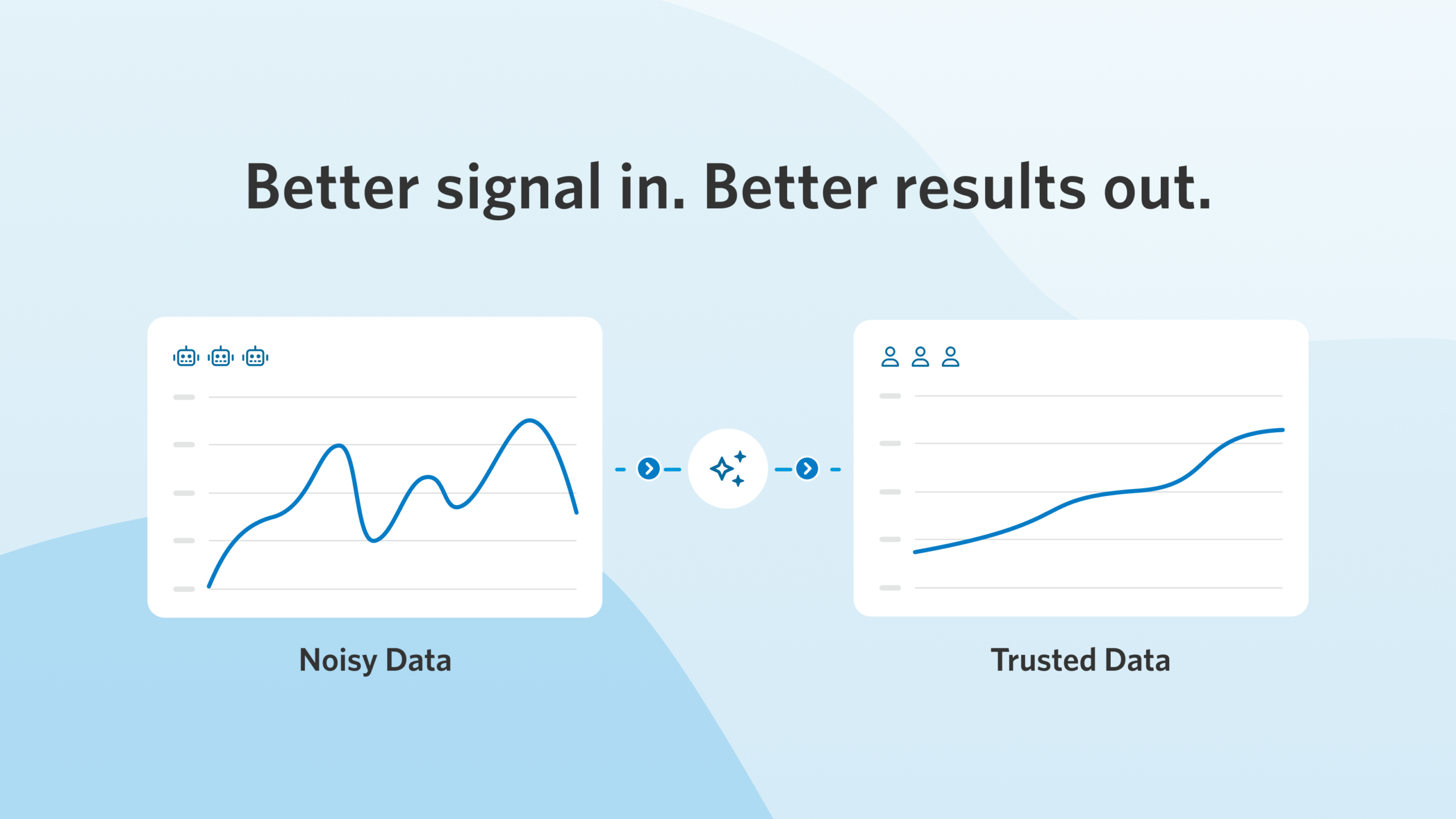
If the signals are sound, AI finds the right people faster. If they’re not, AI scales the mistake. Lead scores point at the wrong contacts. Next-best-action prompts send sales chasing bots. Content gets “optimised” for an audience that doesn’t exist.
So before asking what AI can do for distribution, ask a simpler question: can you trust what it’s learning from?
Three tests.
1. Is It Clean?
Across financial services, we see 53% of email clicks and 46% of email opens generated by email security scanners, not professional investors.
Feed that into a scoring model and more than half of what it learns about “engaged” contacts comes from machines.
That’s why StoneShot BotShield filters bot activity before it reaches reporting, scoring or automation. Every metric, and every AI built on top of it, starts from human engagement.
2. Is It Consented?
Email tracking is no longer a free-for-all. Regulators in France and Italy now expect consent for tracking pixels.
An AI that scores contacts on data you weren’t permitted to collect isn’t a marketing win. It’s a compliance problem waiting to happen.
StoneShot ConsentTrack records open and click tracking consent separately for each contact. You keep measuring where you’re allowed to, and your AI only works with data it should have.
3. Is It Connected?
Franklin Templeton’s “more client contacts” is really about knowing who to talk to next.
In distribution, that’s rarely one person. It’s a firm. A wealth manager, a platform, a consultant, where several people are reading, clicking and visiting.
StoneShot InvestorIntent brings email engagement and website visits together at company level, so sales teams see which firms are warming up, not just which individuals clicked.
The Next Step: Letting Your AI Talk to Ours
Marketing teams already use AI assistants for content, analysis and planning. The obvious next move is connecting those assistants directly to marketing data.
Not raw exports. Insight.
“Which firms engaged most with our fixed income campaign this quarter?”
“Which events led to follow-up meetings?”
That needs governance. Firms need to know exactly what an agent can see, what it can do, and that the data it receives is clean and consented.
We’re building StoneShot so firms can connect their own AI to their marketing data through governed agent access, with bot filtering and consent rules applied by default.
Show Your Working
Evident is careful here. Co-CEO Alexandra Mousavizadeh notes the evidence “isn’t yet proof of alpha”, and only three of the 30 firms have disclosed projected or realised returns on AI at all.
Which is exactly the point.
Distribution is where AI value is easiest to demonstrate. But only if you can show your working.
Clean data. Consented data. Connected data.
The firms pulling ahead didn’t skip the plumbing.
For most marketing teams, the fastest route to an AI result they can defend isn’t a new model. It’s a better signal.
Want to See Your Real Signal?
Curious what your engagement looks like without the robots, and with consent built in? Try StoneShot with a free trial.
No obligation. No hard sell.
Just a signal you can trust.
We’re always sharing fresh case studies and blogs packed with insights. Sign up now and be the first to know!
Subscribe